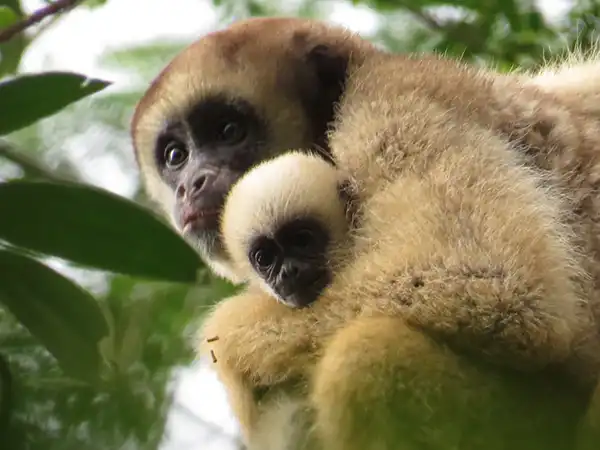
Everyone knows the jaguar. They've probably heard of the golden lion tamarin. They are symbols of Brazilian fauna. But few know that Brazil is home to the largest primate in the Americas and that it could disappear without most of the population even having heard its name. We are talking about the northern muriqui, an endemic species of the Atlantic Forest and critically endangered. There are about a thousand individuals left in the wild.
To change this fate, the Ibiti Project, in partnership with the NGO Muriqui Biodiversity Institute (MIB) is developing a groundbreaking initiative in Brazil: the Muriqui House. There, eight muriquis now live under scientific monitoring, in an area integrated into the regenerated forest. Each one carries a story of survival. And together they help rebuild the future of the species.
The work doesn't stop there. To expand genetic diversity and strengthen the local population, eight more muriquis will be reintroduced into the forests of the Ibiti Project.
Intrigued? Read on for more details about this pioneering initiative worldwide.
What are muriquis?
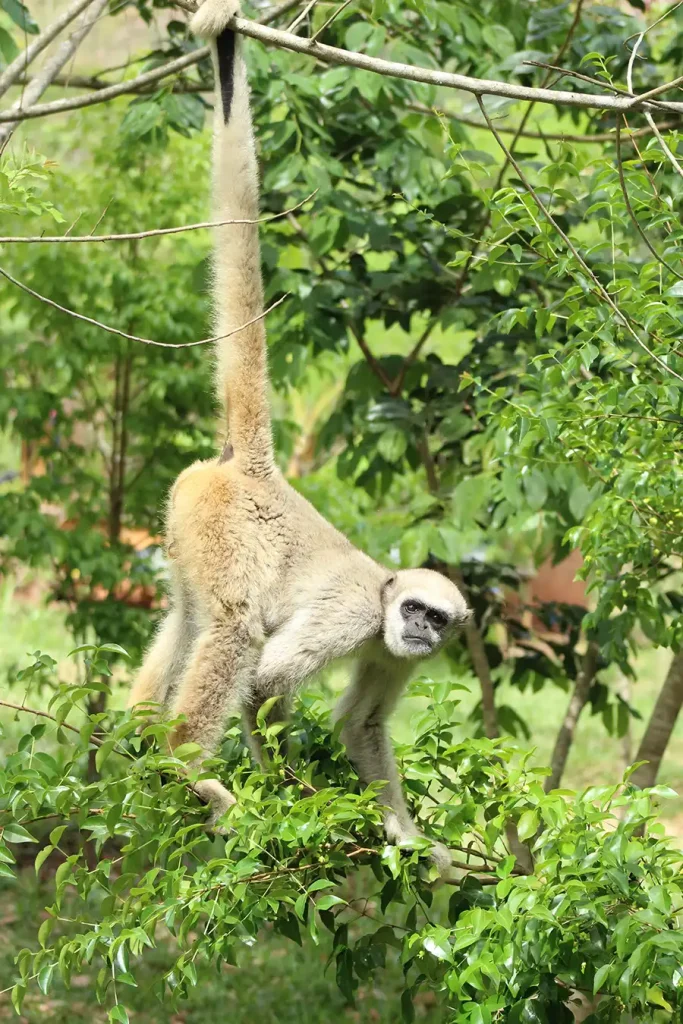
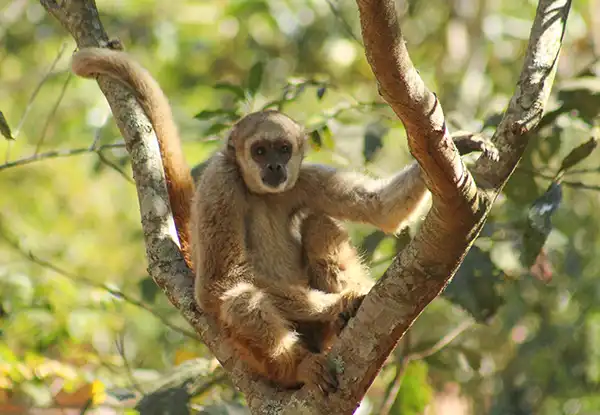
There are two different species of muriqui in Brazil, living in distinct geographical areas: The northern muriqui (Brachyteles hypoxanthus) occurs in southern Bahia, Minas Gerais, Espírito Santo, and the northern portion of Rio de Janeiro. The southern muriqui (Brachyteles arachnoides) inhabits southern Minas Gerais, São Paulo, Rio de Janeiro, and Paraná.
Both species are threatened. But the situation of the northern muriqui is even more delicate, and it is precisely this species that lives in the Ibiti region and is the protagonist of the Muriqui House story.
The muriqui can weigh up to 15 kilograms and reach over a meter in length, including its tail. Also known as the woolly monkey, it moves with impressive lightness through the treetops.
In Tupi-Guarani, "muriqui" means "gentle people of the forest." They don't fight for power aggressively. There is no dominant alpha male. Conflicts are resolved with long hugs. That's why they earned the nickname "hippies of the forest.".
They are exclusively vegetarian and play a crucial ecological role: by feeding on fruits and leaves, they disperse seeds, helping to regenerate the Atlantic Forest. Wherever there are muriquis, the forest thrives.
Why are they threatened?
The main problem is the fragmentation of the Atlantic Forest.
The forest, which was once continuous, is now divided into small fragments isolated by pastures, fences, and roads.
As females reach maturity, they need to migrate to other groups to ensure genetic diversity. However, upon leaving their fragmented areas, many encounter insurmountable barriers.
Without connectivity between forest areas, there is no genetic exchange. Without genetic exchange, populations weaken. Saving the muriqui monkey requires more than protection: it requires rebuilding connections.
Muriqui House: an operation for survival
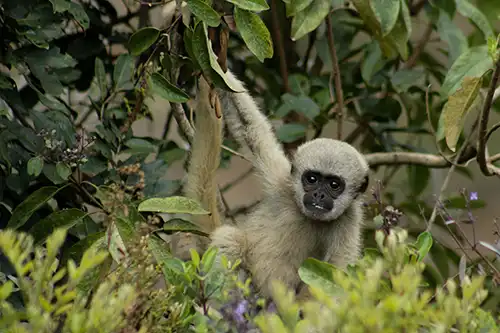
In the area surrounding Ibitipoca State Park, the Ibiti Project, in partnership with the Muriqui Institute of Biodiversity (MIB), the Federal University of Viçosa, the National Center for Research and Conservation of Brazilian Primates (ICMBio), and the University of Wisconsin–Madison (USA), maintains the Muriqui House, a center for the management, research, rehabilitation, and population reconstruction of the species.
It is a monitored area, integrated into the regenerated forest, where isolated or rescued individuals can live in groups, under technical supervision. Today, eight muriquis live there.
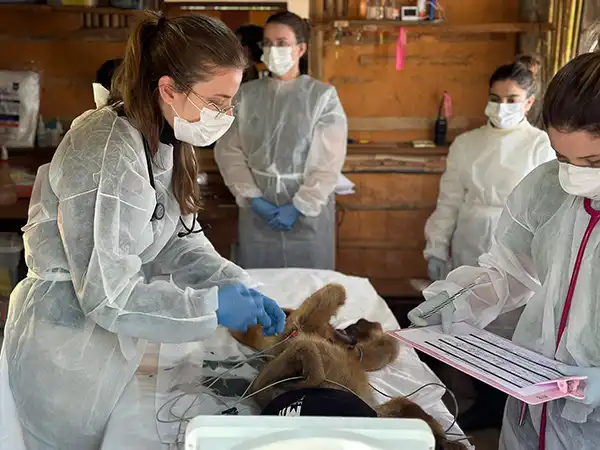
It all started with Luna and Bertolino, two siblings who survived in the region's forests. Then came the females Ecológica and Socorro. Morfeu was found as a newborn, almost lifeless. He survived thanks to the intensive care of the MIB team and today is part of the group. Nena and Cora arrived through rescues and are going through a social adaptation process.
Eliot was born there. Son of Bertolino, a male from the region, and Ecológica, a female from another group, Eliot was the first muriqui cub born naturally within a controlled environment. His birth represents a milestone in the genetic reconnection of the local population. And it is proof that the work is yielding results.
A story that almost ended and then began again.
“What happened here is something extraordinary,” summarizes biologist Fernanda Tabacow, director of the Muriqui Institute of Biodiversity.
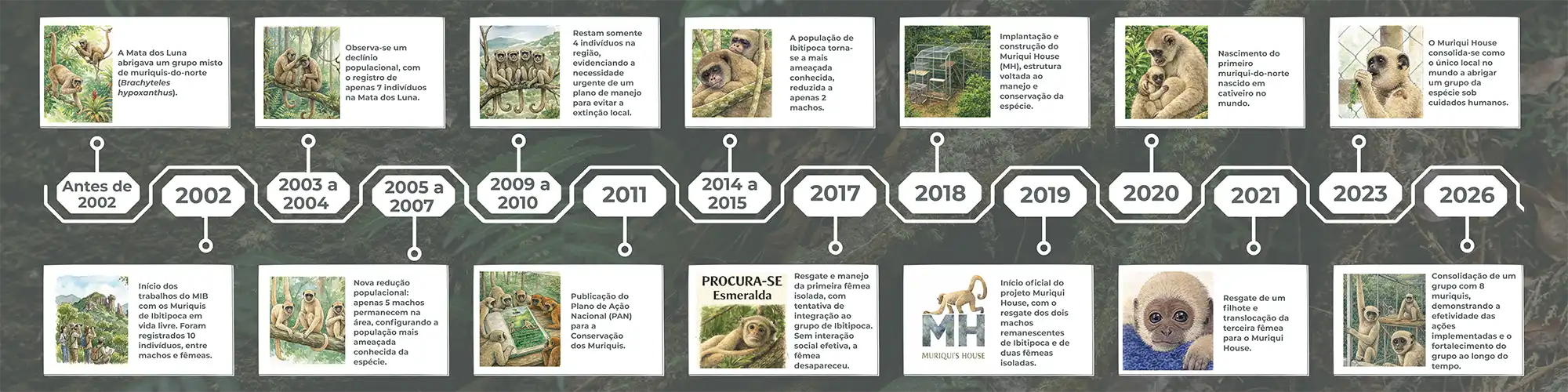
“When MIB began its work on the Ibiti Project in 2002, approximately 10 muriquis were sighted in the region. Over 12 years, this population went into continuous decline until, in 2014, only two males remained, a critical scenario that pointed to the local extinction of the species.
The turning point came in 2019. “In a period of just six to seven years, we managed to reverse this trajectory: we rescued females at risk in other regions, formed a new group, and reached eight individuals, including the birth of a muriqui monkey here. In other words, in half the time it took for the population to practically disappear, we managed to rebuild it.”
Now, with the arrival of another group of eight individuals, the outlook for 2026 is to reach 16 muriquis living in the region, divided into two groups. “This not only prevents the local extinction of the northern muriqui, but also creates the conditions for a genetically healthier and more viable population in the long term. It's a great victory,” celebrates Fernanda.
Here are the key milestones of the initiative, to understand how this story unfolded:
The next step: expanding groups and diversity.
The next phase of the project involves further reintroductions in the Ibiti Project region, a carefully planned move to strengthen the local population.
According to the primatologist Fabiano Melo, According to , a professor at the Federal University of Viçosa (UFV) and advisor to MIB, the focus now is on structuring complete and genetically diverse social groups.
“Our goal is to form at least two distinct groups and ensure greater genetic variability between them. Without diversity, there is no population resilience. And without socially stable groups, there is no future for the species,” he explains.
Why does this matter?
“Saving the muriqui is not just about preserving a charismatic species. It's about protecting an umbrella species, whose conservation strengthens all the surrounding biodiversity, on which we also depend. It's about guaranteeing the regeneration of the Atlantic Forest, protecting its springs and maintaining ecological balance. It's about contributing to regulating the climate,” argues Marcello Nery, president of MIB.
And it's a decision that will ensure the largest primate in the Americas will not be remembered merely as a footnote in the country's environmental history.
Meet MIB
The Muriqui Institute of Biodiversity is a non-governmental organization dedicated to the protection of muriquis and their habitat in the Atlantic Forest for over ten years.
Currently, MIB monitors approximately 700 individuals in the wild, distributed across dozens of projects in partnership with public and private institutions.
The institution uses cutting-edge technology to enhance conservation efficiency, including tracking via chips, monitoring cameras, and behavioral and genetic analysis.
But above all, MIB has accumulated decades of scientific knowledge about the species, knowledge that underpins the strategy applied at Muriqui House. It also promotes environmental education, raises visitor awareness, and supports academic research.
Find out more: mib.org.br Instagram: @mib_muriqui
How it all began
It all began in 1982, when Carlinhos Repetto acquired the Fazenda do Engenho farm, in the Lima Duarte region (MG), and simply allowed the forest to reclaim its space over an old coffee plantation. His enthusiasm soon inspired his cousin and friend Renato Machado, who, along with his brother Marcelo Machado, became Carlinhos' partner. Together, in addition to building the Pousada do Engenho inn, they began an intense environmental regeneration effort, eradicating the brachiaria grass and replanting Atlantic Forest trees.
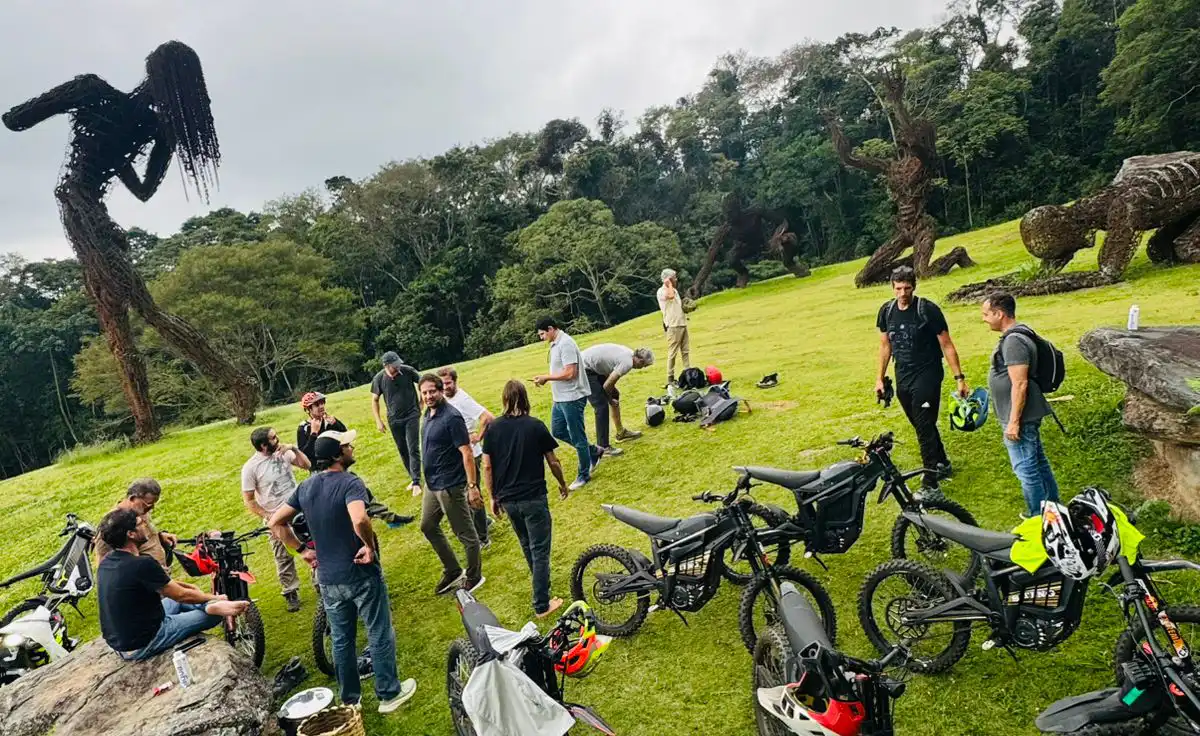
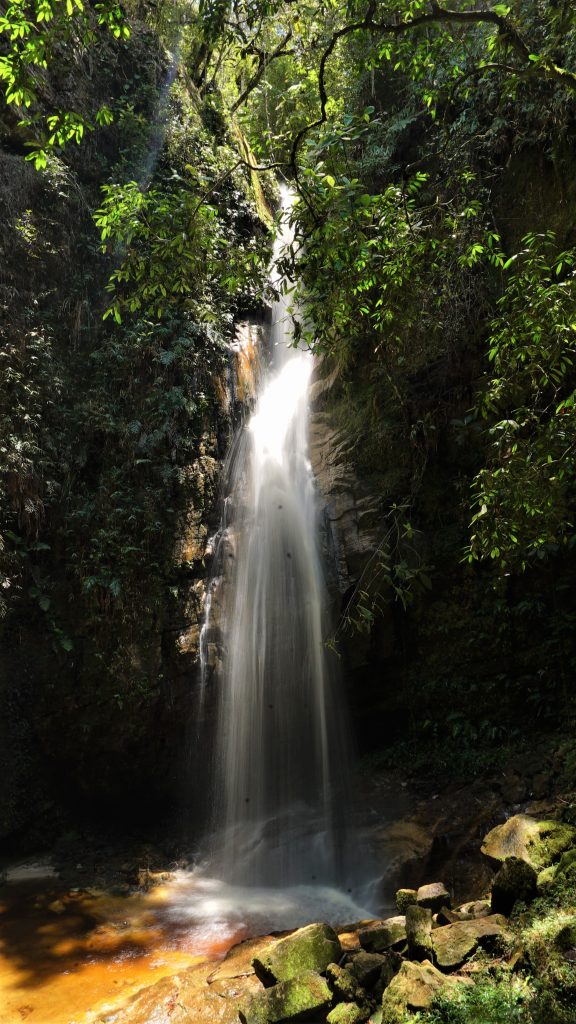
What began as the Ibitipoca Reserve became the Ibitipoca Commune and, today, is the Ibiti Project: a territory where nature regeneration goes hand in hand with well-being, innovation, and hospitality in a setting marked by beautiful waterfalls, luxury hotels, and works of art, such as the giant statues made of recycled metal. Currently, six thousand hectares of degraded pastures are being recovered, sequestering carbon and restoring the lost balance.
It was also Carlinhos who first raised awareness about the need to preserve the northern muriqui monkeys in the region. For years, he sought records of the species he knew existed in the Mata do Luna forest, based on reports from residents. His perseverance was rewarded when he obtained the first photographic record of a muriqui in the area, proving its presence. At the time, he found trees in full bloom bearing muriqui fruit – an essential food source for the monkeys – marked for felling. He convinced Renato Machado to acquire the Mata do Luna forest, ensuring the preservation of that crucial habitat.
Muriqui Sounds: music for the forest
To raise awareness about the preservation of muriquis, the Ibiti Project is also betting on the power of culture and is hosting another edition of... Muriqui Sounds, a festival organized by Privilège Brasil.
The festival brings together electronic music, art, and vegetarian cuisine amidst nature and the iconic statues of the project. The event becomes a platform for promoting the cause of the muriquis (Amazon river turtles) and the work developed at Muriqui House in partnership with the Muriqui Institute of Biodiversity.
By combining music, art, and nature, the festival helps bring the story of the northern muriqui monkey to new audiences, reminding us that protecting biodiversity also depends on raising awareness.
Read more
Muriqui Day: how preservation began in Ibiti
Ibiti regenerates more than 1,200 hectares of Atlantic Forest