
Paul Watson in Ibiti: the sea meets the mountain before COP30
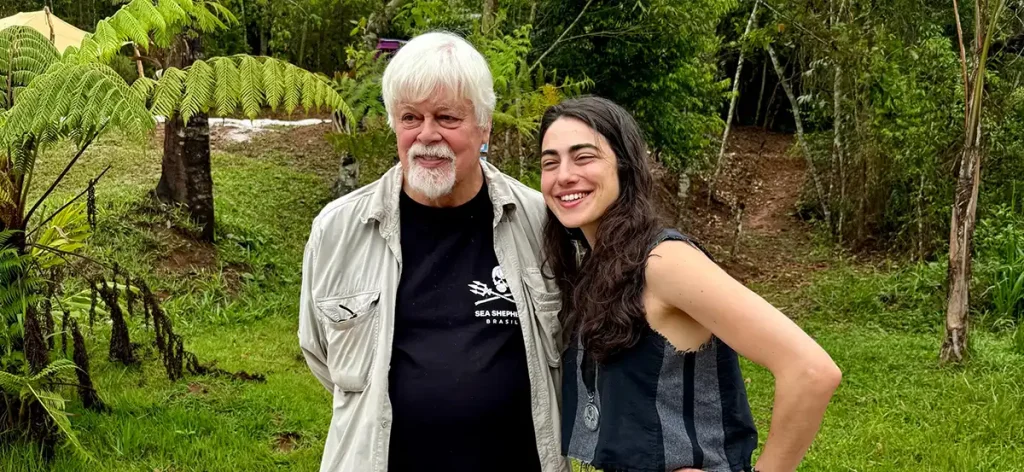
Before Belém hosts leaders and environmentalists from all over the world at COP30, the mountains of Minas Gerais have already begun to echo the conversations that matter. High up in the mountains, Ibiti Projeto has made room for a rare immersion: four days of dialog and experiences with Paul Watson, founder of Sea Shepherd and one of the most radical and influential ecological activists on the planet. Between vegan meals and discussions in symbolic Ibiti settings - such as the Statues, the Oca, Café Gaia and Praia do Mogol - Watson advocated a profound paradigm shift: abandoning the anthropocentric view, which places human beings at the center of everything, and adopting a biocentric view, which recognizes the interdependence between all forms of life. “For thousands of years we have seen the world from an anthropocentric point of view, as if everything was about us, as if we were the only species that mattered. But we are only part of the whole. The species we share the planet with are more important than us, because they can live without us human beings, and we can't live without them. We depend on insects, trees, birds, phytoplankton and zooplankton for our very survival,” said Watson during the meeting. With his direct and provocative tone, the captain, who has been sailing the seas in defense of marine life for more than five decades, transformed Ibiti into a symbolic port, where the ocean met the mountains and activism mixed with contemplation. Alongside navigator Tamara Klink and her mother, Marina Klink, filmmaker Gert-Peter Bruch (Planète Amazone), Nathalie Gil (president of Sea Shepherd Brasil) and other names committed to the cause, Watson took part in dialogues that addressed global ethics, biocentrism and the old-new ways of coexisting with the planet. Culture, ethics and the limits of tradition In one of the talks, Tamara Klink questioned the use of the word “culture” as a justification for practices such as fishing. “Many argue that hunting and fishing are part of the local culture. But when these peoples already have access to alternatives, such as supermarkets and other food sources, to what extent can culture justify destruction?” asked Tamara. Watson answered without hesitation: “Culture cannot justify cruelty. It can't justify ecological destruction. This is the 21st century, we don't need that anymore. The British no longer need to hunt foxes, the Spanish no longer need bullfighting. Nothing can be justified by culture when it involves suffering and unnecessary death.” A meeting before the summits The event, held between October 31 and November 3, was a rehearsal of a new ecological paradigm, born not from conferences and official speeches, but from the meeting between people who live what they stand for, as is the case with the group that met in Ibiti, especially the partners of the Naveia brand, involved in supporting and organizing the event. Between a coffee at Gaia and a chat by Praia do Mogol, ideas emerged that question not only activism, but the very meaning of being alive. Ethics, art and nature merged in the Minas Gerais music played on the violin and accordion during dinner at the Oca, in the film screening at the Cine Mazzaropi and in the procession of Life School children through the streets of Vila Mogol: a reminder that the future is also educated by example. For Ibiti Projeto, which has been consolidating itself as a territory of regeneration and freedom, the meeting reinforced its vocation: to be a space for listening and experimentation, where the dialog between human beings and the planet can be rebuilt. No blue, no green The motto “No blue, no green”, which Sea Shepherd will take to the COP30 agenda, was also echoed in Ibiti. The phrase sums up the essence of the movement that defends the interdependence between oceans and forests, reminding us that the health of the planet begins with the balance between water and life. The campaign gained national prominence when the SOS Oceano coalition (which brings together organizations such as Sea Shepherd Brasil) launched, in partnership with the Droga5 agency, a version of the Brazilian flag without the color blue, symbolizing the marine crisis. The initiative, presented during Rio Ocean Week, warns of the collapse of aquatic ecosystems and reinforces the global goal of protecting 30% of the oceans by 2030. Water is life Inspired by Watson's presence, Ibiti Projeto installed a symbolic plaque on Praia do Mogol, reaffirming its commitment to life and the waters that are born there: Ibiti's Commitment to the Ocean Here, where the rivers are born, we recognize that the ocean begins: from the springs of the Paraíba Basin to the Rio da Prata and beyond. In homage to Captain Paul Watson, guardian of the sea, we commit ourselves to taking care of these waters so that they reach the ocean pure, alive and free. “Intelligence is the ability of a species to live in harmony with its environment”Captain Paul Watson A call to action Between profound reflections and symbolic gestures, the meeting in Ibiti left a powerful reminder: the regeneration of the planet begins within each one of us. For donations and volunteering: Sea Shepherd Brasil